Shopify pricing & loyalty app

Custom Wholesale Pricing & Loyalty Rewards for Shopify

Show each customer their own price, reward repeat purchases, and grow retention, with no coding.

No coding required · Plans from $19/month
STOREShop   Collections   Cart (0)
PREMIUM TIER

Signature Collection

⭐⭐⭐⭐⭐   4.9
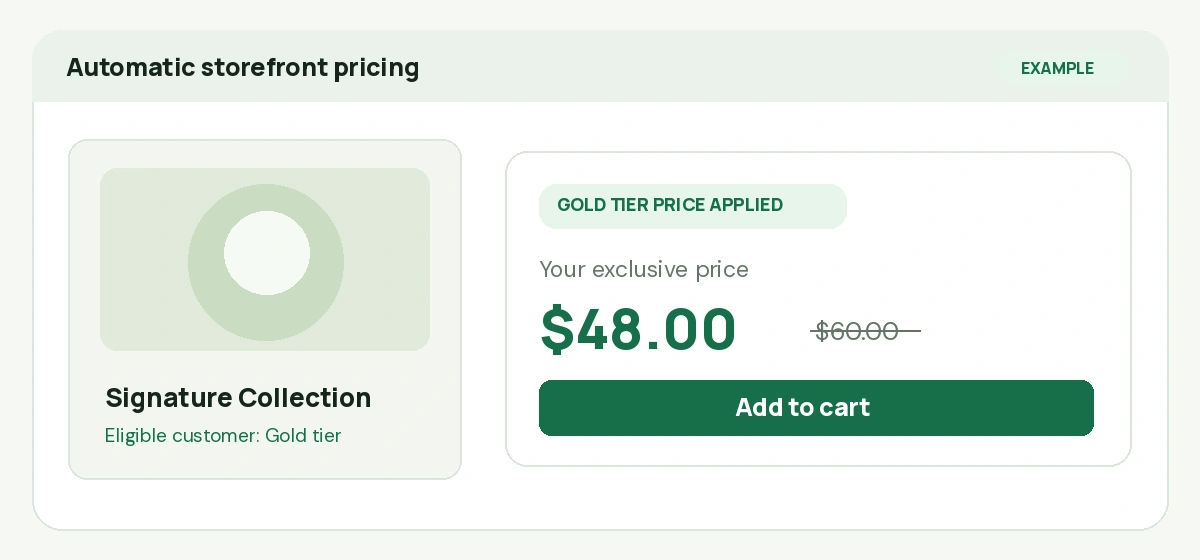
$48.00 $60.00
Gold Tier VIP Your exclusive price is applied automatically
SAVED 20%
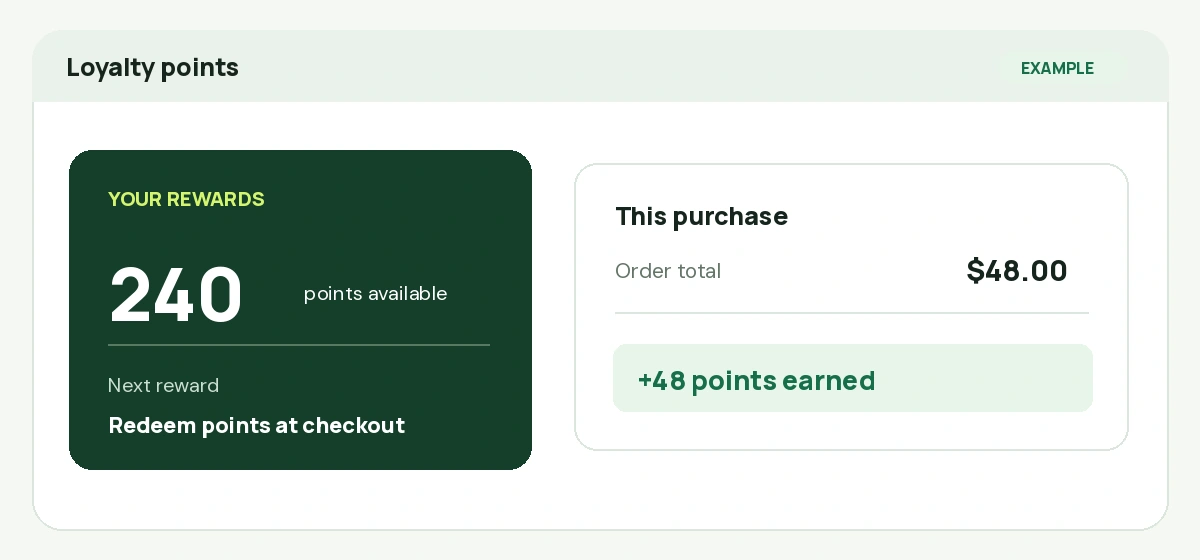
Earn 48 Points Loyalty rewards on this purchase
Add to cart
Everything for your business

Help shoppers decide while they’re still considering.

Give the right offer and the right information at the point where the buying decision happens.

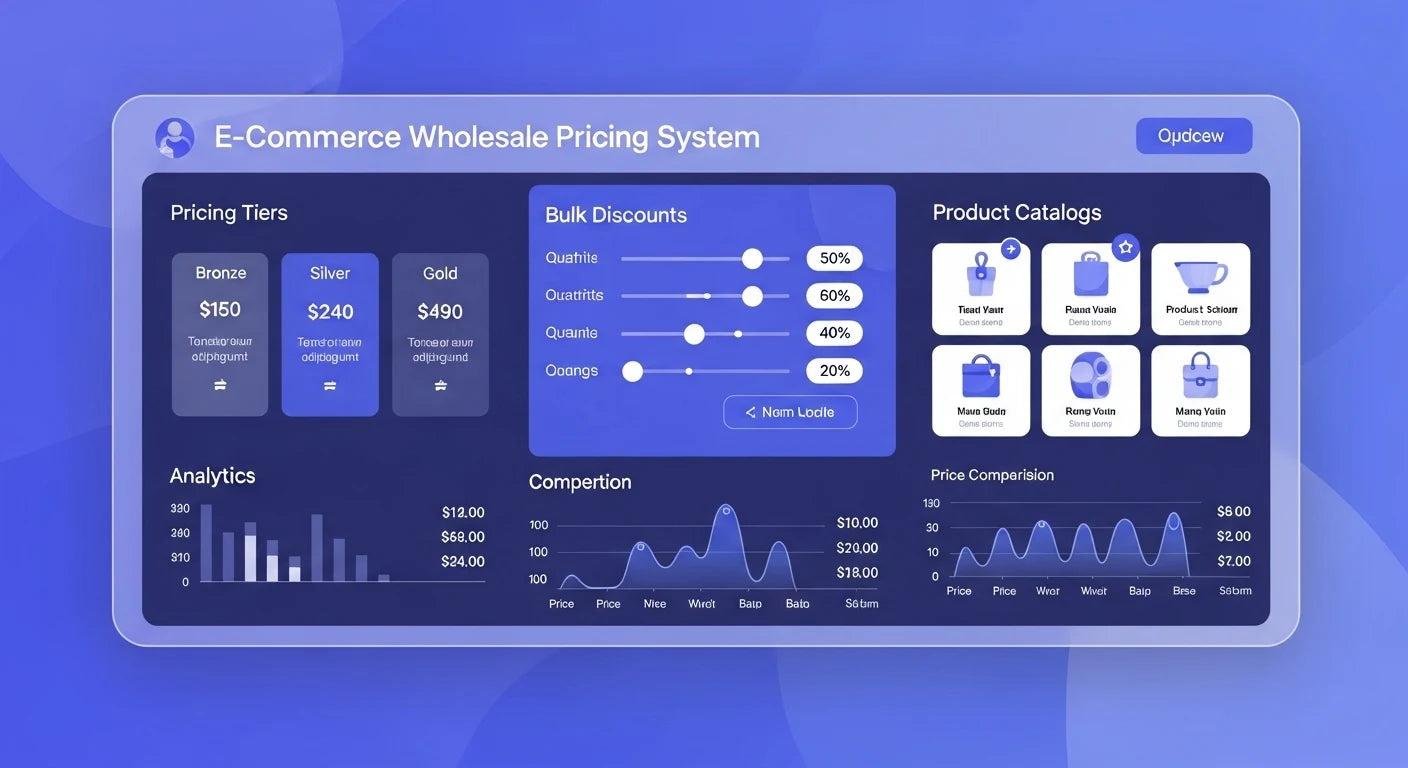
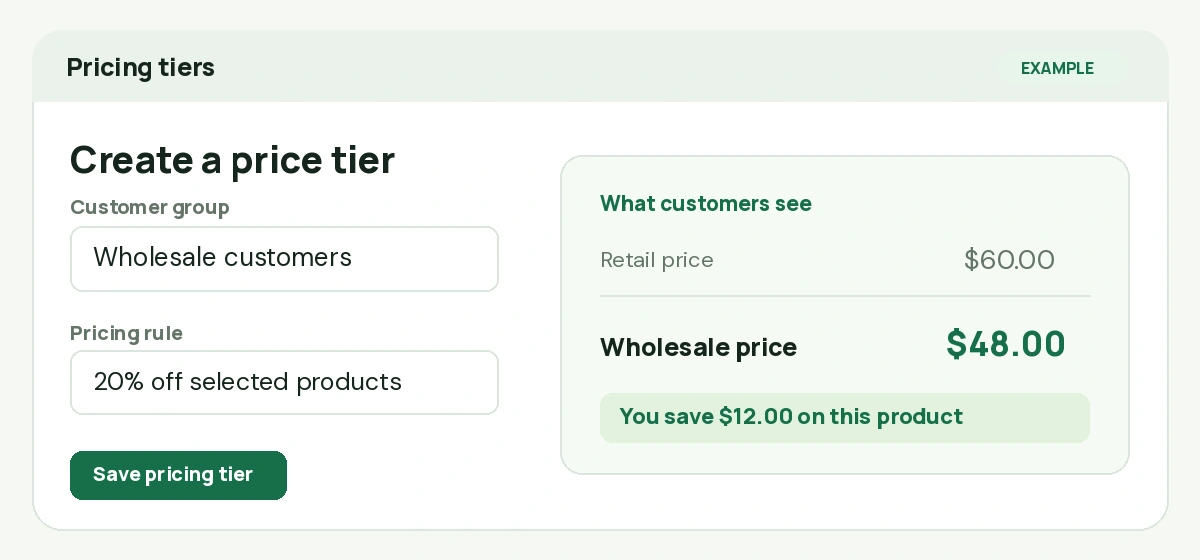
Pricing Tiers configuration
01 / TIER-BASED PRICING

Targeted Customer Segments

Create VIP, Gold, or Wholesale customer tiers with exclusive pricing and automated assignments.

Auto Price Replacement
02 / AUTO PRICE REPLACEMENT

Seamless Shopping Experience

Instantly replaces retail prices for logged-in eligible customers across your entire storefront automatically.

Loyalty Points System
03 / LOYALTY PROGRAM

Reward Repeat Customers

Automatically reward customers with points on every purchase with fully configurable redemption rates.

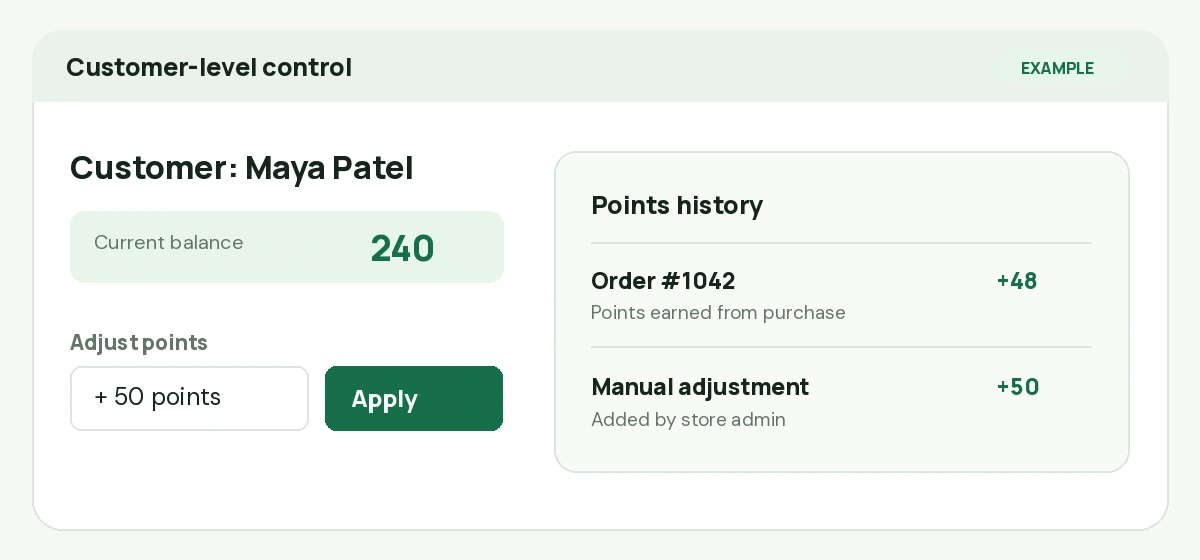
Manual Adjustments
04 / FULL CONTROL

Detailed Customer Insights

Easily manage points, adjust balances directly from the admin, and set exclusive prices for individual customers.

Simple setup

From installation to a powerful pricing strategy.

01

Install the app

Add Wholesale B2B Custom Pricing to your Shopify store and open its dashboard.

02

Configure your tiers

Set up your pricing logic, select products, and establish your loyalty rules.

03

Activate on storefront

Enable the app embed block in your Shopify theme without touching any code.

Pricing

Start with the features you need.

Free plan available. See current plan details and available features before installing.

Resources & Updates

Our Blog

View all articles
Shopify Apps MarginMate: Simplify Shopify B2B, Wholesale and Custom Pricing
Oct 10, 2026
MarginMate: Simplify Shopify B2B, Wholesale and Custom Pricing
A Shopify store can have a simple product catalogue and still have a complicated pricing structure behind it.The reason is the customers.A retail shopper, a wholesale account, and a long-term customer may all visit the same storefront, but the way a business works with each of them can be very different.Once those differences become part of everyday sales, standard pricing alone may no longer be enough.Customer-based pricing gives merchants a way to reflect those relationships without making the storefront complicated for everyone else.Build Pricing Around the Customers You ServePricing is often treated as something that belongs to the product.In many businesses, it also belongs to the customer.Wholesale buyers may have different commercial terms from retail shoppers. VIP customers may receive benefits that are not available to every visitor. Some customers may also have arrangements specific to their account. Instead of relying on store-wide discounts, merchants can organize these relationships through customer-based pricing. This creates a clearer system. Customers who qualify for special pricing can receive it through their account, while standard shoppers continue with the normal store price.Give Customer Groups a Clear StructureAs a store develops different types of buyers, keeping pricing organized becomes increasingly important.MarginMate supports tier-based pricing, allowing merchants to create groups such as VIP, Gold, and Wholesale.These tiers provide a consistent structure for customers who share similar pricing conditions.Rather than treating every special-price customer as a separate case, merchants can establish a pricing level and assign eligible customers to it.This makes it easier to maintain consistent pricing when the customer base expands.Keep Room for Individual Customer ArrangementsNot every business relationship fits neatly into a tier.Some customers may have pricing that is specific to their account or business requirements.MarginMate supports customer-specific pricing alongside tier-based pricing, giving merchants another level of flexibility.This is particularly useful when individual arrangements need to remain separate from the store's broader customer groups.Instead of changing a general tier to accommodate one customer, the merchant can maintain that customer's pricing independently.Put the Correct Price in Front of the CustomerA well-organized pricing system should also make shopping easier.When special pricing depends on customer eligibility, discount codes can add unnecessary steps. Customers may need to remember the code, enter it correctly, or contact the store when something does not work as expected.MarginMate's auto price replacement allows eligible logged-in customers to see their applicable pricing directly across the storefront.The customer gets a simpler buying experience, while the merchant does not have to depend on repeated manual price adjustments.Use Loyalty for More Than DiscountsCustomer retention does not always have to depend on reducing the product price.Loyalty rewards offer another way to give customers value while keeping the store's main pricing structure intact.MarginMate includes a configurable loyalty points system where merchants can define earning and redemption rules. Points can also be manually added or deducted when an adjustment is needed.This gives merchants a practical way to recognize repeat customers without turning every retention effort into another discount campaign.Keep Pricing Information in One PlacePersonalized pricing brings more information into the day-to-day management of a Shopify store.Customer tiers, individual prices, loyalty points, and related settings all need to remain accurate.MarginMate brings these functions together in one dashboard.Having this information in one place makes it easier for merchants to review their pricing setup, make changes, and keep customer-specific arrangements organized.It also reduces the need to depend on scattered records or separate processes when managing customer pricing.A Useful Approach for Mixed-Customer StoresCustomer-based pricing becomes particularly useful when a Shopify business serves more than one type of buyer.It can support:Retail stores that also serve wholesale customersB2B businesses with account-based pricingStores with VIP or premium customer groupsBusinesses with negotiated customer pricesStores that want pricing and loyalty to work togetherThe purpose is not to make pricing different for everyone.It is to make the pricing structure better suited to the way the business actually sells.Let the Pricing Structure Grow With the BusinessA pricing model that works for a small customer base may become harder to maintain as the store develops.More customer groups can mean more pricing arrangements. More individual agreements can mean more information to track. A growing loyalty program can add another layer of customer activity.A structured approach helps merchants add this flexibility without turning every new customer or pricing request into a separate manual task.That gives the business room to develop its customer relationships without constantly rebuilding its pricing process.ConclusionShopify stores do not always operate on a one-price-for-everyone model.Retail shoppers, wholesale buyers, VIP customers, B2B accounts, and individually managed customers can all have different pricing requirements.The challenge is keeping those differences organized while giving customers a straightforward shopping experience.MarginMate brings tier-based pricing, customer-specific pricing, automatic price replacement, and loyalty rewards into one system, giving Shopify merchants more flexibility in how they manage customer pricing and retention.MarginMate - https://task19.com/shopify-apps/marginmate
Task19 Technologies
Read
Shopify Apps Shopify Customer Pricing: Managing VIP, Wholesale, and Regular Buyers
Oct 8, 2026
Shopify Customer Pricing: Managing VIP, Wholesale, and Regular Buyers
A Shopify store can have a simple product catalogue and still have a complicated pricing structure behind it.The reason is the customers.A retail shopper, a wholesale account, and a long-term customer may all visit the same storefront, but the way a business works with each of them can be very different.Once those differences become part of everyday sales, standard pricing alone may no longer be enough.Customer-based pricing gives merchants a way to reflect those relationships without making the storefront complicated for everyone else.Build Pricing Around the Customers You ServePricing is often treated as something that belongs to the product.In many businesses, it also belongs to the customer.Wholesale buyers may have different commercial terms from retail shoppers. VIP customers may receive benefits that are not available to every visitor. Some customers may also have arrangements specific to their account. Instead of relying on store-wide discounts, merchants can organize these relationships through customer-based pricing. This creates a clearer system. Customers who qualify for special pricing can receive it through their account, while standard shoppers continue with the normal store price.Give Customer Groups a Clear StructureAs a store develops different types of buyers, keeping pricing organized becomes increasingly important.MarginMate supports tier-based pricing, allowing merchants to create groups such as VIP, Gold, and Wholesale.These tiers provide a consistent structure for customers who share similar pricing conditions.Rather than treating every special-price customer as a separate case, merchants can establish a pricing level and assign eligible customers to it.This makes it easier to maintain consistent pricing when the customer base expands.Keep Room for Individual Customer ArrangementsNot every business relationship fits neatly into a tier.Some customers may have pricing that is specific to their account or business requirements.MarginMate supports customer-specific pricing alongside tier-based pricing, giving merchants another level of flexibility.This is particularly useful when individual arrangements need to remain separate from the store's broader customer groups.Instead of changing a general tier to accommodate one customer, the merchant can maintain that customer's pricing independently.Put the Correct Price in Front of the CustomerA well-organized pricing system should also make shopping easier.When special pricing depends on customer eligibility, discount codes can add unnecessary steps. Customers may need to remember the code, enter it correctly, or contact the store when something does not work as expected.MarginMate's auto price replacement allows eligible logged-in customers to see their applicable pricing directly across the storefront.The customer gets a simpler buying experience, while the merchant does not have to depend on repeated manual price adjustments.Use Loyalty for More Than DiscountsCustomer retention does not always have to depend on reducing the product price.Loyalty rewards offer another way to give customers value while keeping the store's main pricing structure intact.MarginMate includes a configurable loyalty points system where merchants can define earning and redemption rules. Points can also be manually added or deducted when an adjustment is needed.This gives merchants a practical way to recognize repeat customers without turning every retention effort into another discount campaign.Keep Pricing Information in One PlacePersonalized pricing brings more information into the day-to-day management of a Shopify store.Customer tiers, individual prices, loyalty points, and related settings all need to remain accurate.MarginMate brings these functions together in one dashboard.Having this information in one place makes it easier for merchants to review their pricing setup, make changes, and keep customer-specific arrangements organized.It also reduces the need to depend on scattered records or separate processes when managing customer pricing.A Useful Approach for Mixed-Customer StoresCustomer-based pricing becomes particularly useful when a Shopify business serves more than one type of buyer.It can support:Retail stores that also serve wholesale customersB2B businesses with account-based pricingStores with VIP or premium customer groupsBusinesses with negotiated customer pricesStores that want pricing and loyalty to work togetherThe purpose is not to make pricing different for everyone.It is to make the pricing structure better suited to the way the business actually sells.Let the Pricing Structure Grow With the BusinessA pricing model that works for a small customer base may become harder to maintain as the store develops.More customer groups can mean more pricing arrangements. More individual agreements can mean more information to track. A growing loyalty program can add another layer of customer activity.A structured approach helps merchants add this flexibility without turning every new customer or pricing request into a separate manual task.That gives the business room to develop its customer relationships without constantly rebuilding its pricing process.ConclusionShopify stores do not always operate on a one-price-for-everyone model.Retail shoppers, wholesale buyers, VIP customers, B2B accounts, and individually managed customers can all have different pricing requirements.The challenge is keeping those differences organized while giving customers a straightforward shopping experience.MarginMate brings tier-based pricing, customer-specific pricing, automatic price replacement, and loyalty rewards into one system, giving Shopify merchants more flexibility in how they manage customer pricing and retention.MarginMate - https://task19.com/shopify-apps/marginmate
Vrinda Vijayan
Read
Shopify Apps One Shopify Store, Multiple Prices: Keeping Pricing Under Control
Oct 6, 2026
One Shopify Store, Multiple Prices: Keeping Pricing Under Control
A Shopify store can have a simple product catalogue on the surface while the pricing behind it is much more detailed. A regular product price may sit alongside wholesale rates, VIP pricing, negotiated deals, and customer-specific adjustments. Managing these arrangements is straightforward at first. The real challenge appears when products, customers, and business terms start changing.New Products Add More Pricing DecisionsAdding a product is usually a simple process, but stores with multiple pricing arrangements may need to consider more than the standard selling price. A new product might need to follow an existing pricing structure, receive a special rate for a customer group, or remain at the standard price.When the catalogue is small, these decisions are easy to handle. As more products are introduced, they become another part of everyday store administration.A Price Change Is Not Always a Simple UpdateProduct prices can change because of supplier costs, margins, seasonal demand, or business strategy.But a change to the public price may not apply to every customer.For example, a product could move from $50 to $55 for regular shoppers while an existing wholesale agreement remains unchanged. The merchant therefore needs to update the intended price without affecting arrangements that are still valid.Old Pricing Arrangements Can Be Easy to MissCustomer agreements can change over time.A special rate may have been created for a particular order, a negotiated deal may have ended, or a customer may have moved to a different pricing level.If these changes are not reflected properly, an old price can remain active without attracting much attention.This is especially easy to overlook when pricing decisions have accumulated over a long period.Exceptions Need a Different Level of AttentionStandard pricing structures are usually easier to maintain than individual exceptions.One customer might receive a special price for selected products. Another may have a negotiated rate that does not match the usual wholesale level.These cases are part of real business relationships, but they can make pricing management more complicated when every exception has to be handled separately.Small Pricing Errors Can Create Extra WorkA pricing mistake does not always end with the wrong amount being displayed.It can lead to customer questions, order corrections, internal checks, and unnecessary back-and-forth before a purchase is completed.For stores that regularly work with wholesale or repeat customers, keeping agreed prices accurate can help avoid these interruptions.A Clear Pricing Structure Makes Changes EasierPricing management is not only about setting the right amount today. It is also about being able to update that amount when business conditions change.A structured setup gives merchants a clearer way to handle standard pricing, customer groups, and individual arrangements without having to rely on scattered records or repeated manual checks.Where MarginMate FitsMarginMate is built for Shopify merchants who need customer-level pricing without making the setup unnecessarily difficult to manage.It supports pricing levels such as VIP, Gold, and Wholesale, along with individual pricing for specific customers.For example, a product with a public price of $50 can have a different agreed price for a VIP or wholesale customer.MarginMate can automatically replace the standard product price with the applicable customer price. Merchants can also make individual customer adjustments when a specific arrangement is needed.The app also includes a loyalty dashboard, bringing customer-related pricing and loyalty activities into one management area.Keeping Pricing Ready for ChangeMultiple pricing arrangements can be useful for Shopify businesses, but they need to stay manageable as the store evolves. New products, price changes, updated agreements, and individual exceptions can all affect the way pricing is maintained. A structured approach helps merchants make those changes with less unnecessary checking and fewer pricing-related issues.MarginMate gives Shopify merchants a practical way to manage VIP, Gold, Wholesale, and individual customer pricing while keeping their pricing setup organised as the business changes.Explore MarginMate by Task19 to see how it can fit into your Shopify pricing workflow.MarginMate - https://task19.com/shopify-apps/marginmateFAQs1. Can Shopify stores offer different prices to different customers?Yes. Shopify stores can use different pricing arrangements for customer groups or individual customers, depending on their business needs and setup.2. Why can managing multiple Shopify prices become difficult?As a store adds more products, customers, and special agreements, keeping every price updated and accurate can require more administrative work.3. Can customer-specific prices be used for wholesale customers?Yes. Wholesale customers can have pricing that differs from the standard store price, depending on the merchant’s pricing structure.4. What happens when a product’s regular price changes?A regular price change may not apply to every customer. Merchants may need to make sure existing customer agreements remain correctly reflected.5. How can Shopify merchants manage individual customer pricing?Merchants can use a structured customer-pricing system to manage pricing levels and individual arrangements instead of relying entirely on manual updates.6. Can MarginMate manage different customer pricing levels?Yes. MarginMate supports pricing levels such as VIP, Gold, and Wholesale, along with individual customer pricing and adjustments.
Vrinda Vijayan
Read
Common questions

Good to know before you install.

Do I need to edit my theme code?

No. Wholesale B2B Custom Pricing is designed for setup without coding. Follow the app’s installation guide to enable the blocks in your theme.

Can I set a fixed price instead of a percentage discount?

Yes. You can use a percentage discount off retail, or define a strict fixed price per product for any tier.

How do customers see their points?

Customers can view their points, loyalty tier, and available redemptions directly in our customizable loyalty widget integrated into your storefront.

Where can I get help setting it up?

Visit the installation guide or contact support.

Experience the Power of Precision.

Transform your store's backend into a sales-driving engine with tailored offers and rewards.

Add to Shopify