
Shopify VIP Pricing: Rewarding Your Most Valuable Customers
Not every customer shops the same way. Some purchase occasionally, while others return regularly and spend more over time.For Shopify merchants, VIP pricing is a way to recognize loyal customers by offering them exclusive prices and benefits.With the right pricing strategy, businesses can make repeat customers feel valued while maintaining control over discounts.Shopify VIP PricingShopify VIP pricing allows merchants to offer special product prices to selected customers based on their membership tier, purchase history or customer group.For example, a store might create three pricing levels:Regular Customers: Standard product prices.Gold Members: Exclusive discounts on selected products.VIP Customers: Special pricing based on customer loyalty or purchase history.This approach allows merchants to reward different customer groups without offering the same discount to everyone.1. Create Clear VIP Customer TiersStart by deciding which customers qualify for special pricing.You might offer VIP benefits to frequent shoppers, long-term customers or buyers who reach a particular spending threshold.Keep the qualification rules simple so customers understand what makes them eligible.2. Offer Discounts That Protect Your MarginsExclusive pricing should benefit customers without unnecessarily reducing profits.For example, instead of offering 20% off every product, a merchant could provide a smaller discount on selected collections.Review product margins before introducing Shopify VIP customer discounts.3. Make Personalized Pricing Easy to AccessCustomers shouldn't have to contact support to receive their eligible prices.With suitable Shopify custom pricing software, merchants can assign customers to pricing tiers and automatically display applicable prices when they log in.This creates a more convenient shopping experience for returning customers.How MarginMate Supports Shopify VIP PricingMarginMate – Custom Pricing & Loyalty helps Shopify merchants manage personalized prices and customer loyalty rewards.The app supports VIP, Gold and Wholesale customer tiers, along with percentage-based discounts, fixed pricing and customer-specific pricing rules.Eligible customers can see their assigned prices automatically when logged in.MarginMate also includes loyalty points for purchases and referrals, allowing businesses to combine personalized pricing with additional customer rewards.Frequently Asked Questions1. What is VIP pricing in Shopify?VIP pricing means offering exclusive product prices to selected customers based on their membership tier, loyalty status or other eligibility rules.2. Can Shopify stores offer different prices to VIP customers?Yes. Merchants can use suitable custom pricing solutions to assign different prices or discounts to eligible customer groups.3. Does VIP pricing help increase repeat purchases?It can encourage customers to return by offering benefits they value. Results depend on the products, reward structure and overall customer experience.ConclusionVIP pricing is about recognizing valuable customer relationships, not simply offering bigger discounts.Clear customer tiers, relevant pricing benefits and a convenient shopping experience can help merchants build a more thoughtful loyalty strategy.Give Your Loyal Customers Pricing That Feels PersonalExplore MarginMate to manage exclusive Shopify customer pricing and loyalty rewards in one place.
READ ARTICLE
Shopify Custom Pricing: Benefits for Online Stores
Not every customer shops the same way. Some purchase occasionally, while others place bulk orders or return regularly.Offering the same price to every customer may not always suit a business. Shopify custom pricing allows merchants to create different pricing options based on customer needs and purchasing behaviour.Why Custom Pricing MattersA flexible pricing strategy can help online stores serve different customer groups without changing their entire product catalogue.Some key benefits include:Customer-specific pricing: Offer personalised prices to selected customers.Wholesale pricing: Provide special rates for bulk buyers.Pricing tiers: Create different prices for VIP, Gold, or Wholesale customers.Volume-based discounts: Offer better prices for larger orders.Customer retention: Encourage repeat purchases through relevant pricing benefits.Managing Custom Pricing on ShopifyHandling different pricing rules manually can become difficult as a store grows.Shopify merchants can use pricing tools to organise customer groups, automate discounts, and manage pricing rules more efficiently.For example, MarginMate supports customer-specific pricing, tier-based discounts, volume pricing, and loyalty rewards within Shopify.ConclusionShopify custom pricing helps businesses offer suitable prices to different customer groups while keeping pricing organised.Whether serving retail shoppers or wholesale buyers, a clear pricing strategy can improve the shopping experience and support long-term customer relationships.
READ ARTICLE
How to Set Up Custom Pricing in Shopify: A Simple Guide
Not every Shopify customer shops the same way. Some purchase occasionally, while others place bulk orders or return regularly.Offering the same prices to everyone may not always suit your business. Wholesale buyers may need special rates, and loyal customers might appreciate exclusive discounts.Shopify custom pricing allows store owners to create different pricing rules for specific customers or groups, making it easier to manage retail, wholesale, and loyalty-based offers.Here's how custom pricing works and how to set it up effectively.What Is Custom Pricing in Shopify?Custom pricing allows merchants to offer different product prices based on customer groups, purchasing requirements, or individual agreements.For example:Regular Customers: Pay standard retail prices.VIP Customers: Receive exclusive discounts.Wholesale Buyers: Access special pricing for larger orders.Individual Customers: Receive negotiated prices based on their requirements.This helps businesses offer suitable prices without changing their standard pricing for every shopper.How to Set Up Custom Pricing in Shopify1. Create Customer Pricing TiersStart by organizing your customers into groups based on their purchasing needs.Common Shopify customer pricing tiers include Retail, VIP, Gold Members, and Wholesale.Each group can have its own pricing structure, making discounts easier to manage.2. Set Custom Pricing RulesOnce your customer groups are defined, decide how pricing should work.Common options include:Percentage-based discountsFixed product pricesVolume-based pricingCustomer-specific price adjustmentsFor example, wholesale buyers might receive lower prices when ordering larger quantities, while VIP members receive a fixed discount on selected products.Choose rules that make sense for your business and protect your profit margins.3. Apply Pricing to Eligible CustomersThe next step is ensuring customers see the correct prices.Shopify offers native B2B catalogs for managing product availability and pricing. Available features and assignment options depend on the Shopify plan.Stores needing additional customer-level pricing options can explore apps such as MarginMate Custom Pricing, which supports customer tiers, personalized pricing rules, and automatic price replacement for eligible logged-in customers.Before publishing any pricing changes, check the product page, cart, and checkout to ensure prices are applied correctly.How Loyalty Rewards Work With Shopify Custom PricingCustom pricing is useful for managing different customer groups, while loyalty rewards give shoppers another reason to return.A Shopify loyalty points program can reward customers for eligible purchases and allow them to redeem points according to the store's settings.When creating a loyalty program, consider:How customers earn points.How points can be redeemed.Whether points expire.Whether rewards can be combined with other discounts.Clear rules make the program easier for customers to understand and for store owners to manage.Common Custom Pricing Mistakes to AvoidCustom pricing works best when the rules are simple and clearly defined.Some common mistakes include:Creating too many pricing tiers.Applying overlapping discounts.Not testing prices for logged-in customers.Offering discounts without calculating profit margins.Failing to explain loyalty reward conditions.Review your pricing structure regularly to ensure it remains practical for both your business and your customers.ConclusionShopify custom pricing helps merchants offer suitable prices to different customers without making pricing management complicated.Whether you're managing wholesale buyers, VIP customers, or loyalty rewards, the goal is to keep pricing simple, consistent, and easy to manage.If you're looking to manage custom pricing and loyalty rewards together, explore MarginMate.Is your Shopify store's current pricing strategy meeting the needs of different customers?
READ ARTICLE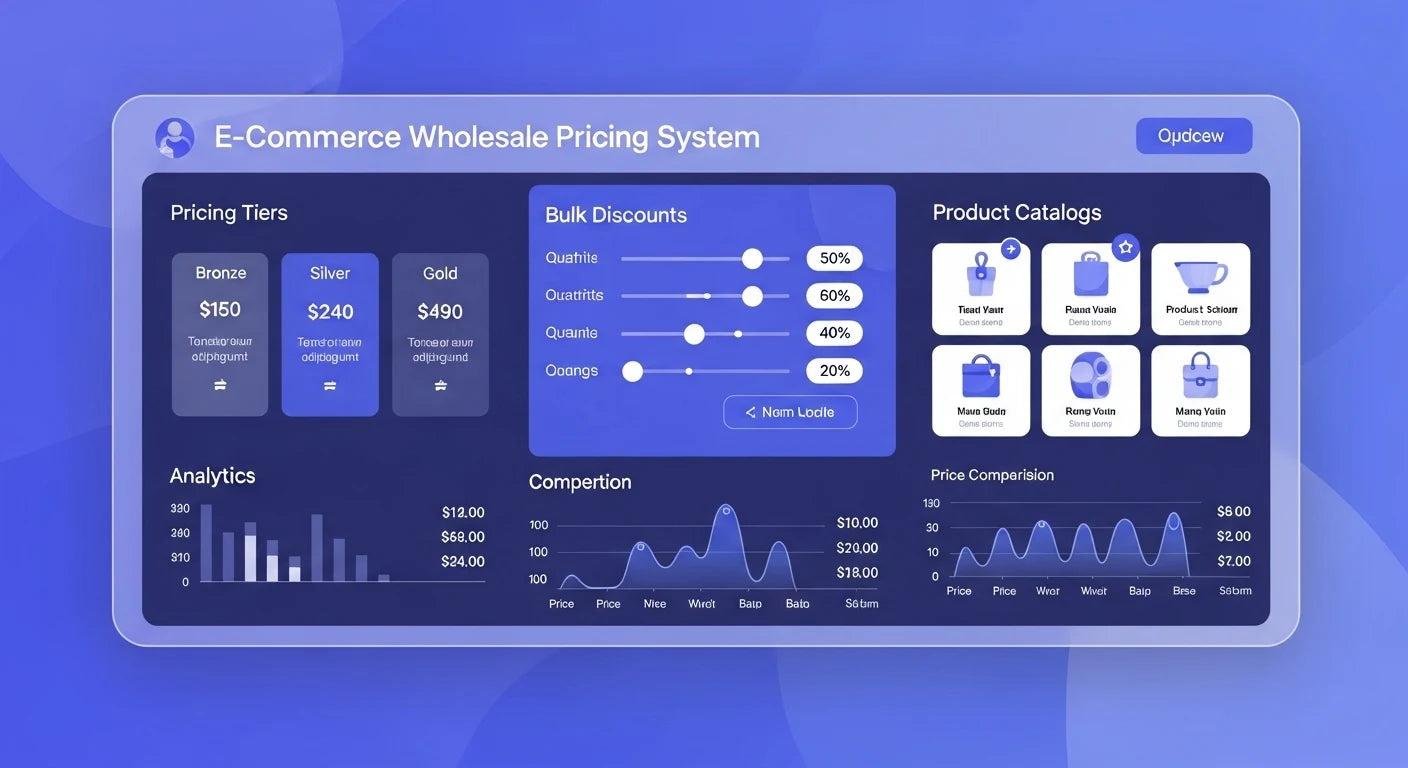
MarginMate: Simplify Shopify B2B, Wholesale and Custom Pricing
A Shopify store can have a simple product catalogue and still have a complicated pricing structure behind it.The reason is the customers.A retail shopper, a wholesale account, and a long-term customer may all visit the same storefront, but the way a business works with each of them can be very different.Once those differences become part of everyday sales, standard pricing alone may no longer be enough.Customer-based pricing gives merchants a way to reflect those relationships without making the storefront complicated for everyone else.Build Pricing Around the Customers You ServePricing is often treated as something that belongs to the product.In many businesses, it also belongs to the customer.Wholesale buyers may have different commercial terms from retail shoppers. VIP customers may receive benefits that are not available to every visitor. Some customers may also have arrangements specific to their account. Instead of relying on store-wide discounts, merchants can organize these relationships through customer-based pricing. This creates a clearer system. Customers who qualify for special pricing can receive it through their account, while standard shoppers continue with the normal store price.Give Customer Groups a Clear StructureAs a store develops different types of buyers, keeping pricing organized becomes increasingly important.MarginMate supports tier-based pricing, allowing merchants to create groups such as VIP, Gold, and Wholesale.These tiers provide a consistent structure for customers who share similar pricing conditions.Rather than treating every special-price customer as a separate case, merchants can establish a pricing level and assign eligible customers to it.This makes it easier to maintain consistent pricing when the customer base expands.Keep Room for Individual Customer ArrangementsNot every business relationship fits neatly into a tier.Some customers may have pricing that is specific to their account or business requirements.MarginMate supports customer-specific pricing alongside tier-based pricing, giving merchants another level of flexibility.This is particularly useful when individual arrangements need to remain separate from the store's broader customer groups.Instead of changing a general tier to accommodate one customer, the merchant can maintain that customer's pricing independently.Put the Correct Price in Front of the CustomerA well-organized pricing system should also make shopping easier.When special pricing depends on customer eligibility, discount codes can add unnecessary steps. Customers may need to remember the code, enter it correctly, or contact the store when something does not work as expected.MarginMate's auto price replacement allows eligible logged-in customers to see their applicable pricing directly across the storefront.The customer gets a simpler buying experience, while the merchant does not have to depend on repeated manual price adjustments.Use Loyalty for More Than DiscountsCustomer retention does not always have to depend on reducing the product price.Loyalty rewards offer another way to give customers value while keeping the store's main pricing structure intact.MarginMate includes a configurable loyalty points system where merchants can define earning and redemption rules. Points can also be manually added or deducted when an adjustment is needed.This gives merchants a practical way to recognize repeat customers without turning every retention effort into another discount campaign.Keep Pricing Information in One PlacePersonalized pricing brings more information into the day-to-day management of a Shopify store.Customer tiers, individual prices, loyalty points, and related settings all need to remain accurate.MarginMate brings these functions together in one dashboard.Having this information in one place makes it easier for merchants to review their pricing setup, make changes, and keep customer-specific arrangements organized.It also reduces the need to depend on scattered records or separate processes when managing customer pricing.A Useful Approach for Mixed-Customer StoresCustomer-based pricing becomes particularly useful when a Shopify business serves more than one type of buyer.It can support:Retail stores that also serve wholesale customersB2B businesses with account-based pricingStores with VIP or premium customer groupsBusinesses with negotiated customer pricesStores that want pricing and loyalty to work togetherThe purpose is not to make pricing different for everyone.It is to make the pricing structure better suited to the way the business actually sells.Let the Pricing Structure Grow With the BusinessA pricing model that works for a small customer base may become harder to maintain as the store develops.More customer groups can mean more pricing arrangements. More individual agreements can mean more information to track. A growing loyalty program can add another layer of customer activity.A structured approach helps merchants add this flexibility without turning every new customer or pricing request into a separate manual task.That gives the business room to develop its customer relationships without constantly rebuilding its pricing process.ConclusionShopify stores do not always operate on a one-price-for-everyone model.Retail shoppers, wholesale buyers, VIP customers, B2B accounts, and individually managed customers can all have different pricing requirements.The challenge is keeping those differences organized while giving customers a straightforward shopping experience.MarginMate brings tier-based pricing, customer-specific pricing, automatic price replacement, and loyalty rewards into one system, giving Shopify merchants more flexibility in how they manage customer pricing and retention.MarginMate - https://task19.com/shopify-apps/marginmate
READ ARTICLE
Shopify Customer Pricing: Managing VIP, Wholesale, and Regular Buyers
A Shopify store can have a simple product catalogue and still have a complicated pricing structure behind it.The reason is the customers.A retail shopper, a wholesale account, and a long-term customer may all visit the same storefront, but the way a business works with each of them can be very different.Once those differences become part of everyday sales, standard pricing alone may no longer be enough.Customer-based pricing gives merchants a way to reflect those relationships without making the storefront complicated for everyone else.Build Pricing Around the Customers You ServePricing is often treated as something that belongs to the product.In many businesses, it also belongs to the customer.Wholesale buyers may have different commercial terms from retail shoppers. VIP customers may receive benefits that are not available to every visitor. Some customers may also have arrangements specific to their account. Instead of relying on store-wide discounts, merchants can organize these relationships through customer-based pricing. This creates a clearer system. Customers who qualify for special pricing can receive it through their account, while standard shoppers continue with the normal store price.Give Customer Groups a Clear StructureAs a store develops different types of buyers, keeping pricing organized becomes increasingly important.MarginMate supports tier-based pricing, allowing merchants to create groups such as VIP, Gold, and Wholesale.These tiers provide a consistent structure for customers who share similar pricing conditions.Rather than treating every special-price customer as a separate case, merchants can establish a pricing level and assign eligible customers to it.This makes it easier to maintain consistent pricing when the customer base expands.Keep Room for Individual Customer ArrangementsNot every business relationship fits neatly into a tier.Some customers may have pricing that is specific to their account or business requirements.MarginMate supports customer-specific pricing alongside tier-based pricing, giving merchants another level of flexibility.This is particularly useful when individual arrangements need to remain separate from the store's broader customer groups.Instead of changing a general tier to accommodate one customer, the merchant can maintain that customer's pricing independently.Put the Correct Price in Front of the CustomerA well-organized pricing system should also make shopping easier.When special pricing depends on customer eligibility, discount codes can add unnecessary steps. Customers may need to remember the code, enter it correctly, or contact the store when something does not work as expected.MarginMate's auto price replacement allows eligible logged-in customers to see their applicable pricing directly across the storefront.The customer gets a simpler buying experience, while the merchant does not have to depend on repeated manual price adjustments.Use Loyalty for More Than DiscountsCustomer retention does not always have to depend on reducing the product price.Loyalty rewards offer another way to give customers value while keeping the store's main pricing structure intact.MarginMate includes a configurable loyalty points system where merchants can define earning and redemption rules. Points can also be manually added or deducted when an adjustment is needed.This gives merchants a practical way to recognize repeat customers without turning every retention effort into another discount campaign.Keep Pricing Information in One PlacePersonalized pricing brings more information into the day-to-day management of a Shopify store.Customer tiers, individual prices, loyalty points, and related settings all need to remain accurate.MarginMate brings these functions together in one dashboard.Having this information in one place makes it easier for merchants to review their pricing setup, make changes, and keep customer-specific arrangements organized.It also reduces the need to depend on scattered records or separate processes when managing customer pricing.A Useful Approach for Mixed-Customer StoresCustomer-based pricing becomes particularly useful when a Shopify business serves more than one type of buyer.It can support:Retail stores that also serve wholesale customersB2B businesses with account-based pricingStores with VIP or premium customer groupsBusinesses with negotiated customer pricesStores that want pricing and loyalty to work togetherThe purpose is not to make pricing different for everyone.It is to make the pricing structure better suited to the way the business actually sells.Let the Pricing Structure Grow With the BusinessA pricing model that works for a small customer base may become harder to maintain as the store develops.More customer groups can mean more pricing arrangements. More individual agreements can mean more information to track. A growing loyalty program can add another layer of customer activity.A structured approach helps merchants add this flexibility without turning every new customer or pricing request into a separate manual task.That gives the business room to develop its customer relationships without constantly rebuilding its pricing process.ConclusionShopify stores do not always operate on a one-price-for-everyone model.Retail shoppers, wholesale buyers, VIP customers, B2B accounts, and individually managed customers can all have different pricing requirements.The challenge is keeping those differences organized while giving customers a straightforward shopping experience.MarginMate brings tier-based pricing, customer-specific pricing, automatic price replacement, and loyalty rewards into one system, giving Shopify merchants more flexibility in how they manage customer pricing and retention.MarginMate - https://task19.com/shopify-apps/marginmate
READ ARTICLE
One Shopify Store, Multiple Prices: Keeping Pricing Under Control
A Shopify store can have a simple product catalogue on the surface while the pricing behind it is much more detailed. A regular product price may sit alongside wholesale rates, VIP pricing, negotiated deals, and customer-specific adjustments. Managing these arrangements is straightforward at first. The real challenge appears when products, customers, and business terms start changing.New Products Add More Pricing DecisionsAdding a product is usually a simple process, but stores with multiple pricing arrangements may need to consider more than the standard selling price. A new product might need to follow an existing pricing structure, receive a special rate for a customer group, or remain at the standard price.When the catalogue is small, these decisions are easy to handle. As more products are introduced, they become another part of everyday store administration.A Price Change Is Not Always a Simple UpdateProduct prices can change because of supplier costs, margins, seasonal demand, or business strategy.But a change to the public price may not apply to every customer.For example, a product could move from $50 to $55 for regular shoppers while an existing wholesale agreement remains unchanged. The merchant therefore needs to update the intended price without affecting arrangements that are still valid.Old Pricing Arrangements Can Be Easy to MissCustomer agreements can change over time.A special rate may have been created for a particular order, a negotiated deal may have ended, or a customer may have moved to a different pricing level.If these changes are not reflected properly, an old price can remain active without attracting much attention.This is especially easy to overlook when pricing decisions have accumulated over a long period.Exceptions Need a Different Level of AttentionStandard pricing structures are usually easier to maintain than individual exceptions.One customer might receive a special price for selected products. Another may have a negotiated rate that does not match the usual wholesale level.These cases are part of real business relationships, but they can make pricing management more complicated when every exception has to be handled separately.Small Pricing Errors Can Create Extra WorkA pricing mistake does not always end with the wrong amount being displayed.It can lead to customer questions, order corrections, internal checks, and unnecessary back-and-forth before a purchase is completed.For stores that regularly work with wholesale or repeat customers, keeping agreed prices accurate can help avoid these interruptions.A Clear Pricing Structure Makes Changes EasierPricing management is not only about setting the right amount today. It is also about being able to update that amount when business conditions change.A structured setup gives merchants a clearer way to handle standard pricing, customer groups, and individual arrangements without having to rely on scattered records or repeated manual checks.Where MarginMate FitsMarginMate is built for Shopify merchants who need customer-level pricing without making the setup unnecessarily difficult to manage.It supports pricing levels such as VIP, Gold, and Wholesale, along with individual pricing for specific customers.For example, a product with a public price of $50 can have a different agreed price for a VIP or wholesale customer.MarginMate can automatically replace the standard product price with the applicable customer price. Merchants can also make individual customer adjustments when a specific arrangement is needed.The app also includes a loyalty dashboard, bringing customer-related pricing and loyalty activities into one management area.Keeping Pricing Ready for ChangeMultiple pricing arrangements can be useful for Shopify businesses, but they need to stay manageable as the store evolves. New products, price changes, updated agreements, and individual exceptions can all affect the way pricing is maintained. A structured approach helps merchants make those changes with less unnecessary checking and fewer pricing-related issues.MarginMate gives Shopify merchants a practical way to manage VIP, Gold, Wholesale, and individual customer pricing while keeping their pricing setup organised as the business changes.Explore MarginMate by Task19 to see how it can fit into your Shopify pricing workflow.MarginMate - https://task19.com/shopify-apps/marginmateFAQs1. Can Shopify stores offer different prices to different customers?Yes. Shopify stores can use different pricing arrangements for customer groups or individual customers, depending on their business needs and setup.2. Why can managing multiple Shopify prices become difficult?As a store adds more products, customers, and special agreements, keeping every price updated and accurate can require more administrative work.3. Can customer-specific prices be used for wholesale customers?Yes. Wholesale customers can have pricing that differs from the standard store price, depending on the merchant’s pricing structure.4. What happens when a product’s regular price changes?A regular price change may not apply to every customer. Merchants may need to make sure existing customer agreements remain correctly reflected.5. How can Shopify merchants manage individual customer pricing?Merchants can use a structured customer-pricing system to manage pricing levels and individual arrangements instead of relying entirely on manual updates.6. Can MarginMate manage different customer pricing levels?Yes. MarginMate supports pricing levels such as VIP, Gold, and Wholesale, along with individual customer pricing and adjustments.
READ ARTICLE