
From VIP Tiers to Loyalty Points: Building a More Personalized Shopify Customer Experience
A Shopify store can have customers with very different buying patterns.Some may shop occasionally, while others purchase regularly, buy in larger quantities, or have specific pricing agreements with the business. Giving every customer the same price and the same rewards may not always make sense.For these stores, personalization can go beyond product recommendations or promotional emails. It can also apply to pricing, customer tiers, and loyalty rewards.Why One Price Does Not Always Fit Every CustomerA single retail price is simple to manage, but it may not work for every customer relationship.A wholesale buyer may have a negotiated rate. A VIP customer may receive exclusive pricing. Another customer may have an individual agreement for selected products.Trying to handle these differences through separate discount codes or manual price changes can become difficult as the store grows.A more structured approach is to connect pricing with customer groups or individual customers.Organizing Customers Into Pricing TiersCustomer tiers can make pricing easier to organize.For example, a store could have Gold, VIP, and Wholesale customers, with each group receiving its own pricing rules.Instead of creating individual discounts every time, merchants can define the pricing structure for each tier and assign customers accordingly.This can be particularly useful for businesses that serve both retail and wholesale customers or want to provide additional benefits to their most valuable customer groups.With MarginMate, merchants can create tier-based pricing and automate customer assignments based on their chosen setup.Showing the Right Price AutomaticallyOnce a customer has been assigned to an eligible pricing group, the next challenge is making sure they see the correct price.MarginMate's Auto Price Replacement feature automatically replaces the regular retail price for eligible logged-in customers across the storefront.For example, if a product normally costs $50, a customer belonging to a pricing tier could see their applicable price after logging in, while other shoppers continue to see the standard retail price.This keeps the storefront experience relevant to each customer without requiring merchants to manually change the product price.When One Customer Needs a Different PriceNot every pricing arrangement fits into a tier.A business may have one customer who has negotiated a special price for a particular product. Another customer may have a different agreement based on their purchase history or business relationship.In these situations, customer-specific pricing provides more flexibility.MarginMate allows merchants to set exclusive prices for individual customers based on their specific requirements.This means a merchant can manage both group-based pricing and individual pricing instead of forcing every customer into the same pricing structure.Turning Purchases Into Loyalty PointsPricing is not the only way to personalize the customer experience.Loyalty rewards can give customers another reason to return to the store.With MarginMate's Loyalty Points System, merchants can automatically reward customers with points when they make purchases. The store can configure how points are earned and how they can be redeemed.For example:Purchase → Earn Points → Redeem LaterThis gives repeat customers a benefit that continues beyond their current order.Keeping Control Over Loyalty AccountsAutomated rewards can handle regular transactions, but merchants may sometimes need to make individual adjustments.A customer might need additional points as a goodwill gesture, or points may need to be deducted after an account adjustment.MarginMate includes Manual Adjustments, allowing merchants to add or deduct points directly from the admin panel.This gives store owners control when a situation falls outside their normal loyalty rules.Keeping Pricing and Loyalty in One PlaceManaging customer tiers, individual prices, and loyalty activity separately can create unnecessary work.MarginMate brings these functions together through a unified dashboard, where merchants can manage pricing rules and loyalty settings from one place.The platform also provides loyalty history and audit information, helping merchants keep track of points earned and spent.For a growing store, having these details organized in one system can make ongoing management easier.Where This Can Be UsefulThis approach can fit several Shopify business models.Wholesale and B2B: Create dedicated pricing tiers for customers who purchase under negotiated terms.VIP Programs: Give selected customers exclusive prices as part of their relationship with the store.Individual Agreements: Set a specific price for a particular customer when standard tier pricing is not suitable.Repeat-Purchase Stores: Use loyalty points to give returning customers an additional benefit.The key is that merchants do not have to rely on one pricing method for every situation.Building a More Flexible Customer ExperiencePersonalization does not always require a complicated storefront.The public retail price can remain unchanged for general shoppers, while eligible customers receive their assigned pricing after logging in. Individual customers can have their own product prices, and loyalty points can provide an additional reward for future purchases.This creates a more flexible system without requiring merchants to manage every customer manually.ConclusionDifferent customers can bring different expectations to a Shopify store.Some may need wholesale pricing, some may qualify for VIP benefits, and others may simply value rewards for returning to the store. Managing all of these relationships through one standard discount system can become difficult over time.A combination of tier-based pricing, customer-specific prices, automatic price replacement, and loyalty points gives merchants more ways to structure these experiences.MarginMate brings these capabilities together in one dashboard, helping Shopify merchants manage personalized pricing and customer rewards without treating every buyer the same.Give Your Shopify Store More Pricing FlexibilityReady to manage customer-specific pricing, tiers, and loyalty rewards in one place?Explore MarginMate and see how it can simplify personalized pricing for your Shopify store.Explore MarginMate
READ ARTICLE
Too Many Pricing Rules? Simplify Shopify Pricing
Pricing is easy when every customer sees the same price. But as a Shopify store grows, managing different pricing arrangements can become more complicated.Some customers may have negotiated rates, while others may receive special prices for specific products. Keeping track of these arrangements manually can take time and make pricing errors more likely.
READ ARTICLE
Pricing Beyond Discounts: A Smarter Shopify Strategy for Different Customers
Discounts can help increase sales, but they aren't always the best way to give customers value. For many Shopify stores, a more flexible pricing approach can provide better control while avoiding unnecessary store-wide promotions.
READ ARTICLE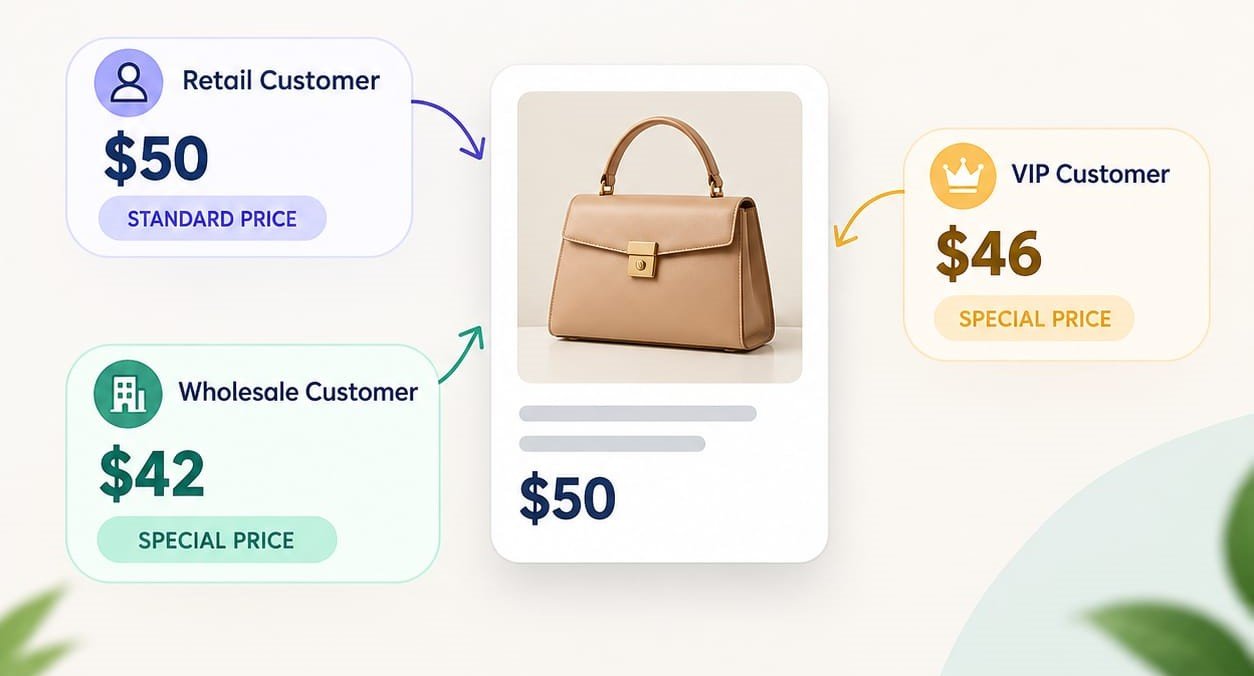
One Product, Different Customers, Different Prices: Making Custom Pricing Work for Shopify
A Shopify store can have one product, but not every sale has to follow the same pricing logic.A customer buying one unit at retail price is in a very different position from a business placing a large recurring order. Some buyers may have negotiated terms, while others may qualify for special benefits because of their relationship with the store.For merchants serving a mix of customer types, a single pricing model can become limiting.Custom pricing offers a way to handle those relationships without changing the public price of every product.
READ ARTICLE
Custom Pricing Meets Loyalty: A Better Way to Reward Shopify Customers
Not every Shopify customer shops in the same way. A first-time buyer, a regular customer, and a wholesale buyer can have very different needs. Giving everyone the same discount may be easy, but it does not always create a strong reason to stay with your store.Combining custom pricing with loyalty rewards gives merchants a more targeted way to recognise valuable customers and encourage them to keep coming back.Go Beyond Store-Wide DiscountsStore-wide discounts are useful for seasonal sales and promotions, but they are not always the best choice for customer retention.Custom pricing allows merchants to offer selected customers a special price on specific products while keeping the regular price for everyone else.For example, a wholesale customer could receive a lower price on products they purchase regularly without changing the retail price for other shoppers.This makes the offer more relevant while giving merchants better control over their pricing.Reward Customers Based on Their RelationshipNot every customer needs the same reward.VIP customers: Exclusive prices or additional benefitsRepeat customers: Points that encourage another purchaseWholesale buyers: Customer-specific pricing for regular ordersLong-term customers: Special offers that recognise continued loyaltyThe idea is simple: reward customers based on the value and behaviour they bring to the store, rather than giving everyone the same offer.Connect Today's Purchase With the Next OneCustom pricing can add value to the current order, while loyalty rewards can encourage the next purchase.A simple loyalty journey could look like:Purchase → Earn Points → Redeem Rewards → Shop AgainFor example, a regular customer could receive a personalised price and earn points from the same order. Those points can then be used toward a future purchase.This gives customers an immediate benefit while creating an incentive to return.Match Rewards to Buying BehaviourThe biggest reward is not necessarily the most effective one.A wholesale customer may value better product pricing, while a frequent shopper may prefer points that can be redeemed later.Merchants can use rewards to encourage:More frequent purchasesHigher order valuesRepeat ordersCustomer retentionWholesale relationshipsWhen rewards support a clear business goal, they become more than just another discount.Protect Your Profit MarginsA good loyalty strategy should work for the customer and the business.Before setting a custom price or reward, consider product margins, purchase frequency, and average order value. Some products may be better suited for special pricing or rewards than others.Targeted offers can help merchants reward valuable customers without reducing prices across the entire store.Keep the Experience SimpleCustomers should be able to understand their benefits without reading through complicated rules.Make it clear:What their special price isHow they earn pointsWhat their rewards are worthWhen they can use themA simple reward system is easier to understand, use, and trust.Measure What MattersA loyalty strategy should be judged by customer behaviour, not just discount usage.Keep an eye on:Repeat purchase rateAverage order valueCustomer retentionReward redemptionProfitabilityThese numbers can show whether personalised offers are actually helping the store build better customer relationships.ConclusionCustomer loyalty does not always require bigger discounts. It is about giving customers relevant value at the right time.Custom pricing makes offers more personal, while loyalty rewards give customers a reason to return. When both are built around real buying behaviour, Shopify merchants can create stronger customer relationships while keeping their offers targeted and sustainable.Ready to make your Shopify offers more personal?Explore MarginMate Custom Pricing to combine customer-specific pricing and loyalty rewards in one solution.
READ ARTICLE