MarginMate: Simplify Shopify B2B, Wholesale and Custom Pricing
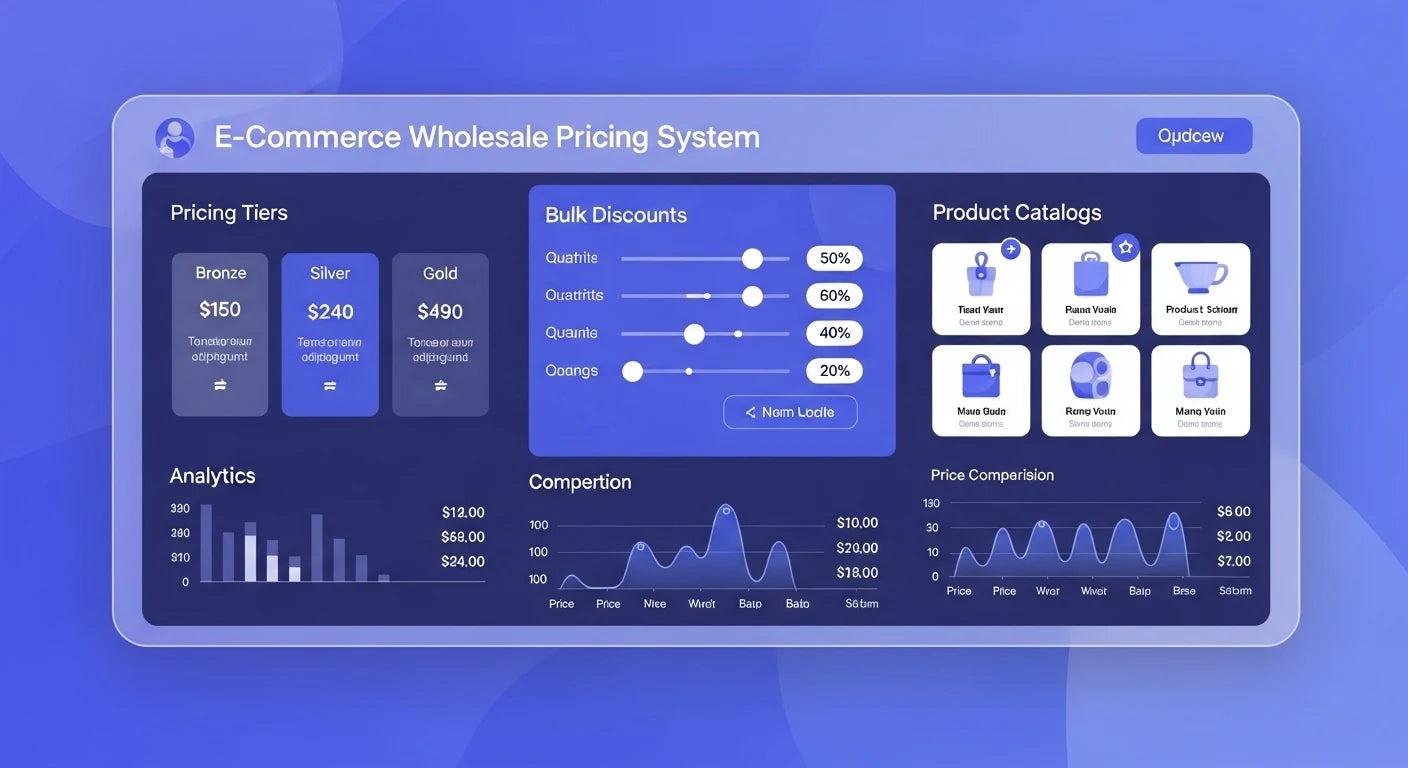
A Shopify store can have a simple product catalogue and still have a complicated pricing structure behind it.The reason is the customers.A retail shopper, a wholesale account, and a long-term customer may all visit the same storefront, but the way a business works with each of them can be very different.Once those differences become part of everyday sales, standard pricing alone may no longer be enough.Customer-based pricing gives merchants a way to reflect those relationships without making the storefront complicated for everyone else.Build Pricing Around the Customers You ServePricing is often treated as something that belongs to the product.In many businesses, it also belongs to the customer.Wholesale buyers may have different commercial terms from retail shoppers. VIP customers may receive benefits that are not available to every visitor. Some customers may also have arrangements specific to their account. Instead of relying on store-wide discounts, merchants can organize these relationships through customer-based pricing. This creates a clearer system. Customers who qualify for special pricing can receive it through their account, while standard shoppers continue with the normal store price.Give Customer Groups a Clear StructureAs a store develops different types of buyers, keeping pricing organized becomes increasingly important.MarginMate supports tier-based pricing, allowing merchants to create groups such as VIP, Gold, and Wholesale.These tiers provide a consistent structure for customers who share similar pricing conditions.Rather than treating every special-price customer as a separate case, merchants can establish a pricing level and assign eligible customers to it.This makes it easier to maintain consistent pricing when the customer base expands.Keep Room for Individual Customer ArrangementsNot every business relationship fits neatly into a tier.Some customers may have pricing that is specific to their account or business requirements.MarginMate supports customer-specific pricing alongside tier-based pricing, giving merchants another level of flexibility.This is particularly useful when individual arrangements need to remain separate from the store's broader customer groups.Instead of changing a general tier to accommodate one customer, the merchant can maintain that customer's pricing independently.Put the Correct Price in Front of the CustomerA well-organized pricing system should also make shopping easier.When special pricing depends on customer eligibility, discount codes can add unnecessary steps. Customers may need to remember the code, enter it correctly, or contact the store when something does not work as expected.MarginMate's auto price replacement allows eligible logged-in customers to see their applicable pricing directly across the storefront.The customer gets a simpler buying experience, while the merchant does not have to depend on repeated manual price adjustments.Use Loyalty for More Than DiscountsCustomer retention does not always have to depend on reducing the product price.Loyalty rewards offer another way to give customers value while keeping the store's main pricing structure intact.MarginMate includes a configurable loyalty points system where merchants can define earning and redemption rules. Points can also be manually added or deducted when an adjustment is needed.This gives merchants a practical way to recognize repeat customers without turning every retention effort into another discount campaign.Keep Pricing Information in One PlacePersonalized pricing brings more information into the day-to-day management of a Shopify store.Customer tiers, individual prices, loyalty points, and related settings all need to remain accurate.MarginMate brings these functions together in one dashboard.Having this information in one place makes it easier for merchants to review their pricing setup, make changes, and keep customer-specific arrangements organized.It also reduces the need to depend on scattered records or separate processes when managing customer pricing.A Useful Approach for Mixed-Customer StoresCustomer-based pricing becomes particularly useful when a Shopify business serves more than one type of buyer.It can support:Retail stores that also serve wholesale customersB2B businesses with account-based pricingStores with VIP or premium customer groupsBusinesses with negotiated customer pricesStores that want pricing and loyalty to work togetherThe purpose is not to make pricing different for everyone.It is to make the pricing structure better suited to the way the business actually sells.Let the Pricing Structure Grow With the BusinessA pricing model that works for a small customer base may become harder to maintain as the store develops.More customer groups can mean more pricing arrangements. More individual agreements can mean more information to track. A growing loyalty program can add another layer of customer activity.A structured approach helps merchants add this flexibility without turning every new customer or pricing request into a separate manual task.That gives the business room to develop its customer relationships without constantly rebuilding its pricing process.ConclusionShopify stores do not always operate on a one-price-for-everyone model.Retail shoppers, wholesale buyers, VIP customers, B2B accounts, and individually managed customers can all have different pricing requirements.The challenge is keeping those differences organized while giving customers a straightforward shopping experience.MarginMate brings tier-based pricing, customer-specific pricing, automatic price replacement, and loyalty rewards into one system, giving Shopify merchants more flexibility in how they manage customer pricing and retention.MarginMate - https://task19.com/shopify-apps/marginmate
READ ARTICLE
Shopify Customer Pricing: Managing VIP, Wholesale, and Regular Buyers
A Shopify store can have a simple product catalogue and still have a complicated pricing structure behind it.The reason is the customers.A retail shopper, a wholesale account, and a long-term customer may all visit the same storefront, but the way a business works with each of them can be very different.Once those differences become part of everyday sales, standard pricing alone may no longer be enough.Customer-based pricing gives merchants a way to reflect those relationships without making the storefront complicated for everyone else.Build Pricing Around the Customers You ServePricing is often treated as something that belongs to the product.In many businesses, it also belongs to the customer.Wholesale buyers may have different commercial terms from retail shoppers. VIP customers may receive benefits that are not available to every visitor. Some customers may also have arrangements specific to their account. Instead of relying on store-wide discounts, merchants can organize these relationships through customer-based pricing. This creates a clearer system. Customers who qualify for special pricing can receive it through their account, while standard shoppers continue with the normal store price.Give Customer Groups a Clear StructureAs a store develops different types of buyers, keeping pricing organized becomes increasingly important.MarginMate supports tier-based pricing, allowing merchants to create groups such as VIP, Gold, and Wholesale.These tiers provide a consistent structure for customers who share similar pricing conditions.Rather than treating every special-price customer as a separate case, merchants can establish a pricing level and assign eligible customers to it.This makes it easier to maintain consistent pricing when the customer base expands.Keep Room for Individual Customer ArrangementsNot every business relationship fits neatly into a tier.Some customers may have pricing that is specific to their account or business requirements.MarginMate supports customer-specific pricing alongside tier-based pricing, giving merchants another level of flexibility.This is particularly useful when individual arrangements need to remain separate from the store's broader customer groups.Instead of changing a general tier to accommodate one customer, the merchant can maintain that customer's pricing independently.Put the Correct Price in Front of the CustomerA well-organized pricing system should also make shopping easier.When special pricing depends on customer eligibility, discount codes can add unnecessary steps. Customers may need to remember the code, enter it correctly, or contact the store when something does not work as expected.MarginMate's auto price replacement allows eligible logged-in customers to see their applicable pricing directly across the storefront.The customer gets a simpler buying experience, while the merchant does not have to depend on repeated manual price adjustments.Use Loyalty for More Than DiscountsCustomer retention does not always have to depend on reducing the product price.Loyalty rewards offer another way to give customers value while keeping the store's main pricing structure intact.MarginMate includes a configurable loyalty points system where merchants can define earning and redemption rules. Points can also be manually added or deducted when an adjustment is needed.This gives merchants a practical way to recognize repeat customers without turning every retention effort into another discount campaign.Keep Pricing Information in One PlacePersonalized pricing brings more information into the day-to-day management of a Shopify store.Customer tiers, individual prices, loyalty points, and related settings all need to remain accurate.MarginMate brings these functions together in one dashboard.Having this information in one place makes it easier for merchants to review their pricing setup, make changes, and keep customer-specific arrangements organized.It also reduces the need to depend on scattered records or separate processes when managing customer pricing.A Useful Approach for Mixed-Customer StoresCustomer-based pricing becomes particularly useful when a Shopify business serves more than one type of buyer.It can support:Retail stores that also serve wholesale customersB2B businesses with account-based pricingStores with VIP or premium customer groupsBusinesses with negotiated customer pricesStores that want pricing and loyalty to work togetherThe purpose is not to make pricing different for everyone.It is to make the pricing structure better suited to the way the business actually sells.Let the Pricing Structure Grow With the BusinessA pricing model that works for a small customer base may become harder to maintain as the store develops.More customer groups can mean more pricing arrangements. More individual agreements can mean more information to track. A growing loyalty program can add another layer of customer activity.A structured approach helps merchants add this flexibility without turning every new customer or pricing request into a separate manual task.That gives the business room to develop its customer relationships without constantly rebuilding its pricing process.ConclusionShopify stores do not always operate on a one-price-for-everyone model.Retail shoppers, wholesale buyers, VIP customers, B2B accounts, and individually managed customers can all have different pricing requirements.The challenge is keeping those differences organized while giving customers a straightforward shopping experience.MarginMate brings tier-based pricing, customer-specific pricing, automatic price replacement, and loyalty rewards into one system, giving Shopify merchants more flexibility in how they manage customer pricing and retention.MarginMate - https://task19.com/shopify-apps/marginmate
READ ARTICLE
One Shopify Store, Multiple Prices: Keeping Pricing Under Control
A Shopify store can have a simple product catalogue on the surface while the pricing behind it is much more detailed. A regular product price may sit alongside wholesale rates, VIP pricing, negotiated deals, and customer-specific adjustments. Managing these arrangements is straightforward at first. The real challenge appears when products, customers, and business terms start changing.New Products Add More Pricing DecisionsAdding a product is usually a simple process, but stores with multiple pricing arrangements may need to consider more than the standard selling price. A new product might need to follow an existing pricing structure, receive a special rate for a customer group, or remain at the standard price.When the catalogue is small, these decisions are easy to handle. As more products are introduced, they become another part of everyday store administration.A Price Change Is Not Always a Simple UpdateProduct prices can change because of supplier costs, margins, seasonal demand, or business strategy.But a change to the public price may not apply to every customer.For example, a product could move from $50 to $55 for regular shoppers while an existing wholesale agreement remains unchanged. The merchant therefore needs to update the intended price without affecting arrangements that are still valid.Old Pricing Arrangements Can Be Easy to MissCustomer agreements can change over time.A special rate may have been created for a particular order, a negotiated deal may have ended, or a customer may have moved to a different pricing level.If these changes are not reflected properly, an old price can remain active without attracting much attention.This is especially easy to overlook when pricing decisions have accumulated over a long period.Exceptions Need a Different Level of AttentionStandard pricing structures are usually easier to maintain than individual exceptions.One customer might receive a special price for selected products. Another may have a negotiated rate that does not match the usual wholesale level.These cases are part of real business relationships, but they can make pricing management more complicated when every exception has to be handled separately.Small Pricing Errors Can Create Extra WorkA pricing mistake does not always end with the wrong amount being displayed.It can lead to customer questions, order corrections, internal checks, and unnecessary back-and-forth before a purchase is completed.For stores that regularly work with wholesale or repeat customers, keeping agreed prices accurate can help avoid these interruptions.A Clear Pricing Structure Makes Changes EasierPricing management is not only about setting the right amount today. It is also about being able to update that amount when business conditions change.A structured setup gives merchants a clearer way to handle standard pricing, customer groups, and individual arrangements without having to rely on scattered records or repeated manual checks.Where MarginMate FitsMarginMate is built for Shopify merchants who need customer-level pricing without making the setup unnecessarily difficult to manage.It supports pricing levels such as VIP, Gold, and Wholesale, along with individual pricing for specific customers.For example, a product with a public price of $50 can have a different agreed price for a VIP or wholesale customer.MarginMate can automatically replace the standard product price with the applicable customer price. Merchants can also make individual customer adjustments when a specific arrangement is needed.The app also includes a loyalty dashboard, bringing customer-related pricing and loyalty activities into one management area.Keeping Pricing Ready for ChangeMultiple pricing arrangements can be useful for Shopify businesses, but they need to stay manageable as the store evolves. New products, price changes, updated agreements, and individual exceptions can all affect the way pricing is maintained. A structured approach helps merchants make those changes with less unnecessary checking and fewer pricing-related issues.MarginMate gives Shopify merchants a practical way to manage VIP, Gold, Wholesale, and individual customer pricing while keeping their pricing setup organised as the business changes.Explore MarginMate by Task19 to see how it can fit into your Shopify pricing workflow.MarginMate - https://task19.com/shopify-apps/marginmateFAQs1. Can Shopify stores offer different prices to different customers?Yes. Shopify stores can use different pricing arrangements for customer groups or individual customers, depending on their business needs and setup.2. Why can managing multiple Shopify prices become difficult?As a store adds more products, customers, and special agreements, keeping every price updated and accurate can require more administrative work.3. Can customer-specific prices be used for wholesale customers?Yes. Wholesale customers can have pricing that differs from the standard store price, depending on the merchant’s pricing structure.4. What happens when a product’s regular price changes?A regular price change may not apply to every customer. Merchants may need to make sure existing customer agreements remain correctly reflected.5. How can Shopify merchants manage individual customer pricing?Merchants can use a structured customer-pricing system to manage pricing levels and individual arrangements instead of relying entirely on manual updates.6. Can MarginMate manage different customer pricing levels?Yes. MarginMate supports pricing levels such as VIP, Gold, and Wholesale, along with individual customer pricing and adjustments.
READ ARTICLE
Shopify Customer-Specific Pricing: 7 Common Mistakes Stores Should Avoid
Selling to different types of customers can make pricing more complicated for Shopify stores. Wholesale buyers, VIP customers, repeat customers, and individual accounts may not all receive the same price.Customer-specific pricing can help stores handle these differences, but poor pricing management can create confusion and unnecessary work. From incorrect prices to outdated customer rules, small mistakes can affect both the customer experience and store operations.Here are seven common mistakes Shopify stores should avoid when managing customer-specific pricing.1. Relying Too Much on Manual Price UpdatesManually changing prices for individual customers can become difficult as a store grows.A store may have dozens of customer agreements covering different products and price levels. Updating each one manually increases the chance of missed changes or inconsistent pricing.A more structured pricing process can make these updates easier to manage.2. Using One Discount for Every CustomerNot every customer should necessarily receive the same discount.A wholesale buyer may have negotiated pricing, while a VIP customer may have a different arrangement. Applying one general discount across different customer types can make it difficult to maintain the pricing agreements that already exist.Stores should define pricing based on the actual customer or customer group rather than relying on a single discount rule.3. Ignoring Product-Level PricingCustomer-specific pricing may apply only to selected products.For example, a business may offer special pricing on certain products to a wholesale customer while keeping standard prices on the rest of the catalog.Using a broad pricing rule without considering individual products can result in discounts being applied where they were not intended.4. Forgetting to Update Old Pricing RulesCustomer relationships and pricing agreements can change over time.A wholesale customer may move to a different pricing level, or a previously negotiated product price may no longer apply. If old pricing rules remain active, customers could continue receiving outdated prices.Regularly reviewing pricing rules helps stores keep customer pricing aligned with current agreements.5. Not Checking Which Price Customers Actually SeeCreating a pricing rule is only part of the process. Stores also need to make sure the correct price is displayed to the intended customer.If a customer sees the standard price instead of their assigned price, or sees a price that does not match their agreement, it can create confusion and require additional support.Testing pricing from the customer's perspective can help identify these issues before they affect more orders.6. Making Pricing Rules Too ComplicatedAs more customers and products are added, pricing structures can become difficult to maintain.Multiple customer groups, individual prices, product-specific rules, and changing agreements can create a complicated setup if there is no clear system behind them.A pricing structure should remain understandable and manageable as the store grows.7. Treating Customer Pricing as a Set-and-Forget TaskCustomer-specific pricing needs occasional review.New customers may need special pricing, existing customers may move between pricing groups, and product prices may change. Leaving pricing untouched for long periods can result in outdated or inconsistent offers.Making pricing review part of regular store management can help keep customer prices accurate.How to Avoid These Customer-Specific Pricing MistakesThe key is to keep customer pricing organized from the beginning.Stores should clearly define customer groups, identify products that require special pricing, review outdated rules, and check that customers see the prices intended for them. Reducing unnecessary manual work can also make pricing easier to manage as the store grows.For Shopify stores that need a more structured way to manage customer-specific prices, MarginMate can help manage different pricing for customers and customer groups while also supporting loyalty management.Ready to simplify customer-specific pricing?Explore MarginMate and manage customer pricing with greater control.Explore MarginMateFrequently Asked Questions1. What is customer-specific pricing on Shopify?Customer-specific pricing means offering different prices to particular customers or customer groups instead of showing the same price to everyone.2. Why do Shopify stores use customer-specific pricing?Stores may use it for wholesale customers, VIP customers, negotiated customer prices, or other business relationships that require different pricing.3. Can different Shopify customers have different prices for the same product?Yes. A store can use customer-specific pricing to offer different prices for the same product to different customers or customer groups.4. What problems can manual customer pricing cause?Manual pricing can become difficult to maintain as the number of customers and products increases. It can also lead to missed updates, outdated prices, or inconsistent pricing.5. How often should customer-specific pricing be reviewed?There is no single schedule that fits every store. Pricing should be reviewed whenever customer agreements, product pricing, or customer groups change, with periodic checks to identify outdated rules.6. Is customer-specific pricing useful for wholesale Shopify stores?It can be useful for stores serving wholesale customers because different business customers may have different agreed prices or pricing structures.7. How can Shopify stores make customer-specific pricing easier to manage?Stores can organize customers into appropriate groups, define clear pricing rules, review them regularly, and use a structured pricing solution to reduce unnecessary manual management.
READ ARTICLE
Customer-Specific Pricing on Shopify: 6 Challenges Stores Need to Manage
Not every customer shops from a Shopify store in the same way.Some customers buy at the regular retail price, while others may purchase in larger quantities or have a long-term relationship with the business. Some may also have individual pricing arrangements based on their requirements.For these stores, customer-specific pricing can be useful. But offering different prices also creates management challenges. As the number of customers and pricing arrangements increases, keeping everything organized can become harder.Here are six challenges Shopify stores may face when managing customer-specific pricing and rewards.1. Too Many Customer Pricing GroupsA store may serve different types of customers, such as retail shoppers, VIP customers, Gold members, and wholesale buyers.Giving each group the right pricing can become difficult when these customers are managed without a clear structure. Store owners need to keep track of which customers belong to which pricing group and ensure the applicable pricing is assigned correctly.Tier-based pricing can help organize customers into groups such as VIP, Gold, or Wholesale, with exclusive pricing for each tier.2. Keeping Customer Prices AccurateSetting a special price is not enough. The customer also needs to see the correct price when shopping on the storefront.Manually replacing retail prices for different customers can create extra work, especially when there are many products and eligible customers.Automatic price replacement can simplify this process by replacing retail prices for eligible logged-in customers across the storefront.This means customers can see the pricing assigned to them without requiring separate manual price changes for each shopping session.3. Handling Customers Who Need Individual PricingNot every customer fits neatly into a predefined pricing tier.A particular customer may have an agreed price based on their purchase history or specific requirements. Creating a separate pricing arrangement for every such customer can make pricing management more complicated.Customer-specific pricing gives merchants the flexibility to set exclusive prices for individual customers when standard tier pricing does not fit their needs.This allows stores to handle individual pricing arrangements without changing the standard price for everyone else.4. Rewarding Customers Beyond PricingSpecial pricing is one way to manage customer relationships, but stores may also want to reward customers for their purchases.Managing a loyalty program separately can add another task to the store's day-to-day operations. Merchants need a way to reward customers consistently while deciding how those rewards can be used.A loyalty points system can automatically reward customers with points on purchases, with configurable redemption rates.This gives stores another way to recognize customer activity without relying only on special pricing.5. Correcting Loyalty Point BalancesAutomatic rewards can handle regular purchases, but not every situation follows the standard process.A merchant may need to give additional points to a customer or remove points when a correction is required. Without direct control over individual balances, small adjustments can become unnecessarily difficult.Manual adjustments allow merchants to add or deduct loyalty points directly from the admin panel.This gives store owners more control when individual customer balances need to be changed.6. Keeping Pricing and Rewards Under ControlCustomer tiers, individual prices, and loyalty points can become difficult to manage when they are handled through separate processes.As the store adds more customer relationships, merchants need a simple way to keep track of pricing and rewards without creating unnecessary administrative work.An unified dashboard can bring these activities together, making it easier to manage the store's pricing strategy and loyalty program from one place.A More Organized Approach to Customer PricingCustomer-specific pricing gives Shopify stores flexibility, but that flexibility needs to be managed carefully.The challenges go beyond simply deciding what price a customer should pay. Stores also need to organize customer groups, maintain accurate pricing, handle individual arrangements, manage loyalty rewards, and make occasional adjustments.A structured approach can make these tasks easier to manage while giving merchants more control over different customer relationships.Manage Customer Pricing and Loyalty With MarginMateMarginMate brings personalized pricing and customer rewards into one management system.Merchants can create VIP, Gold, or Wholesale customer tiers, set exclusive prices for individual customers, automatically replace retail prices for eligible customers, reward purchases with loyalty points, and make manual point adjustments when required.For Shopify stores serving different types of customers, having pricing and loyalty tools together can make these everyday processes more organized and easier to manage.Ready to simplify customer pricing?Explore MarginMate and manage personalized pricing and loyalty rewards from one place.Get started with MarginMate:https://task19.com/shopify-apps/marginmate
READ ARTICLE
Retail vs Wholesale Pricing: Why One Price May Not Work for Every Customer
A Shopify store may sell to customers with very different buying habits.One shopper might purchase a product occasionally, while a business customer could place larger orders every month. Giving both customers exactly the same price may seem straightforward, but it can become limiting when a store starts serving different types of buyers.For merchants handling both retail and wholesale sales, the challenge is finding a pricing structure that works for each without making everyday store management complicated.Retail and Wholesale Customers Buy DifferentlyRetail customers usually purchase products individually at the standard store price. Their order sizes and buying frequency can vary.Wholesale customers typically purchase larger quantities or order regularly for their own business. Their relationship with the seller may also involve agreed rates or ongoing purchasing arrangements.Consider a Shopify skincare store that sells directly to consumers and also supplies salons.A regular customer may buy one bottle of serum occasionally. A salon could order the same product in larger quantities every month for use with its clients.The product hasn't changed, but the business relationship has. That difference can make a single pricing approach difficult to maintain.Common Pricing Challenges for Shopify StoresWholesale buyers may expect different ratesLarger or recurring orders can come with different pricing expectations. When these arrangements are handled manually, merchants have to keep track of who receives a special rate and when it applies.Storewide discounts aren't always suitableA promotion for retail shoppers may not be the right way to handle wholesale pricing.For example, a merchant may want to give a negotiated rate to a particular business customer without reducing the price for everyone visiting the store.Manual adjustments become harder to trackWhen only a few customers have special arrangements, manual updates may seem manageable.But as the number of wholesale accounts grows, using spreadsheets, notes, or repeated price changes can make everyday pricing management more complicated.More customer groups mean more pricing rulesA store may eventually serve retail shoppers, wholesalers, resellers, VIP customers, or long-term business clients.Each group may have different requirements. Without a clear system, managing those differences can take unnecessary time.Retail Pricing vs Wholesale PricingRetail and wholesale pricing serve different purposes.Retail pricing is generally the standard price offered to individual shoppers.Wholesale pricing is often structured around larger quantities, recurring orders, or an ongoing business relationship.The difference doesn't always mean that every wholesale customer should receive the same reduction. Instead, the business can establish pricing that fits its particular customer arrangements.Why Customer-Specific Pricing Can Be UsefulWhen only selected customers need different rates, changing the public product price isn't always practical.A customer-specific approach allows merchants to keep their regular retail pricing while applying separate rates where needed.This can be useful for stores that want to:Maintain standard pricing for retail shoppersProvide agreed rates to wholesale customersSupport VIP or repeat-customer pricingKeep different customer groups organizedReduce repeated manual price changesThe purpose isn't to make pricing more complicated. It is to avoid forcing every customer into the same pricing structure when their buying relationship is different.Keeping Pricing Under Control as the Store GrowsPricing requirements can change as a Shopify business grows.A store that originally served only individual shoppers may later begin working with salons, boutiques, resellers, or other businesses. What was once a simple pricing setup can become harder to manage manually.Having a structured way to handle customer-specific rates can help merchants keep these arrangements organized without constantly changing the store's standard prices.Managing Different Customer Prices on ShopifyFor merchants with multiple customer pricing requirements, a dedicated Shopify solution can simplify the process.MarginMate helps Shopify stores manage customer-specific pricing along with loyalty programs. It allows merchants to set pricing arrangements for selected customers or customer groups instead of relying only on storewide discounts.This gives businesses more control over how they handle retail, wholesale, VIP, and other customer relationships while keeping their regular store pricing in place.ConclusionA single price can work well when a Shopify store serves one straightforward customer group.But once retail and wholesale sales are part of the same business, customers may have different purchasing patterns, order sizes, and commercial relationships.Rather than changing prices manually or applying broad discounts, merchants can use a more structured approach for customers who need different rates.The goal is simple: keep everyday retail pricing clear while making room for the customer relationships that require something different.FAQs1. What is retail pricing?Retail pricing is the standard price a store offers to individual customers purchasing products for personal use.2. What is wholesale pricing?Wholesale pricing is generally used for business customers purchasing larger quantities or maintaining an ongoing purchasing relationship with a seller.3. Is wholesale pricing the same as a discount?No. A discount is often a temporary promotion, while wholesale pricing can be part of an ongoing arrangement with a particular customer or customer group.4. Why can't a storewide discount handle wholesale pricing?A storewide discount affects all eligible shoppers. A merchant may instead want to give a specific business customer a different rate while keeping the normal retail price unchanged.5. When should a Shopify store consider customer-specific pricing?It can be useful when a store has wholesale buyers, VIP customers, resellers, or other customers with agreed pricing arrangements that differ from the standard retail price.Make Customer Pricing Easier to ManageNeed more flexibility than a single storewide price can offer?Explore MarginMate and manage customer-specific pricing and loyalty in one place.Learn more about MarginMate →https://task19.com/shopify-apps/marginmate
READ ARTICLE